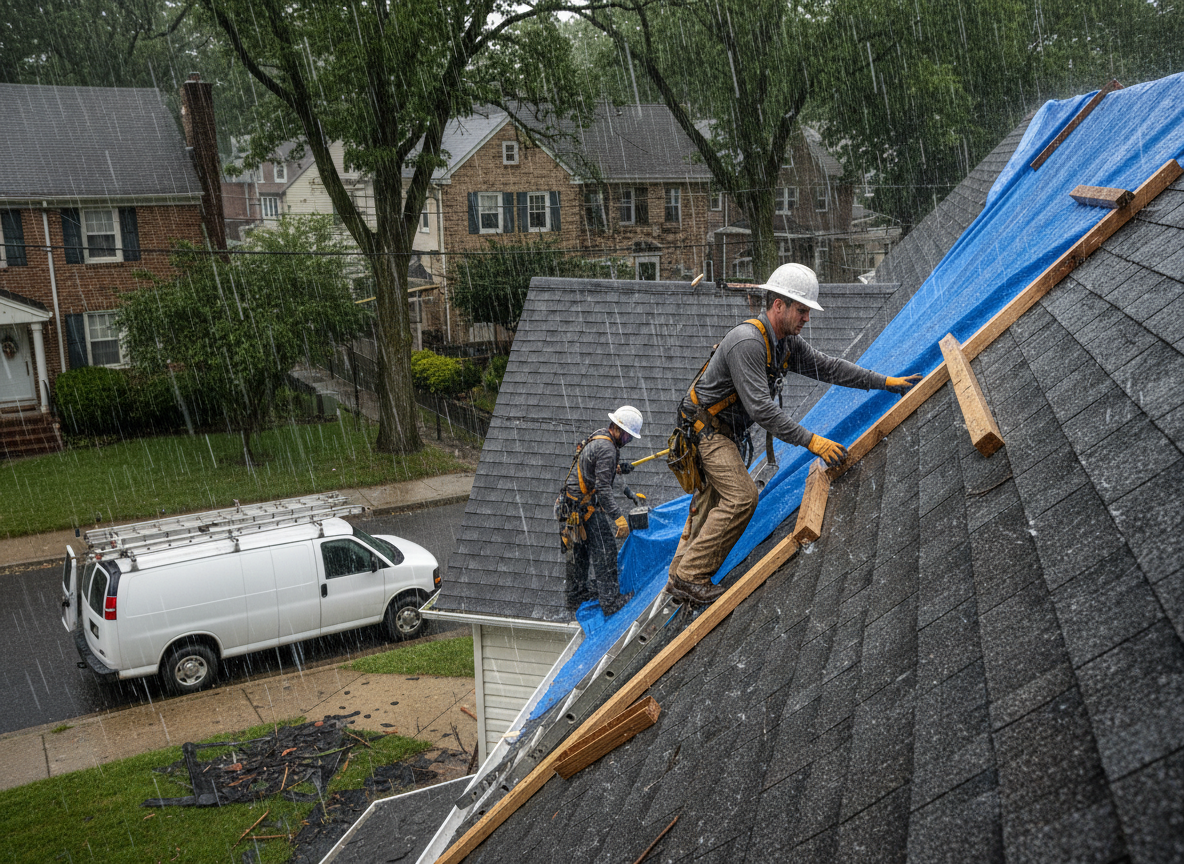
Union sits in Boone County with a humid subtropical climate that brings sudden summer storms and occasional high winds even during mild winters. Homes in the Ryle area and near Union Community Park often feature asphalt shingle roofs installed fifteen to thirty years ago that can fail quickly when wind-driven rain finds weakened seams or flashing. Emergency calls frequently involve active leaks above living spaces or detached garages where water migrates along rafters before homeowners notice.
When responding at any hour, crews first secure the interior with tarps and water extraction to limit drywall damage, then assess the roof from the ground and attic before deciding on temporary patches or full section replacement. Burlington and Florence crews know the rolling terrain here can create wind tunnels along certain streets, pushing debris against vents and valleys that older homes were never built to withstand. Temporary fixes must hold until permanent materials arrive, especially when overnight temperatures drop enough to freeze residual moisture.
Code requirements in Boone County call for proper underlayment and drip edge on any permanent work, yet emergency visits focus on stopping water entry first. Crews carry multiple shingle weights and synthetic underlayment rolls sized for common Union tract homes so a single truck can stabilize most situations without return trips. Homeowners along Cavalry Lane or nearby subdivisions see faster stabilization when they avoid walking on compromised slopes themselves.
Technician insight
In Union, the thing that catches most people out with Emergency roofing service is how quickly wind-driven rain finds the original step flashing on thirty-year-old homes along the Ryle corridor; once water travels behind the brick veneer near Union Community Park, interior damage spreads faster than owners expect.
Ryle Neighborhood Leak After Wind Event
Heavy overnight winds lifted several shingles on a home near Ryle. We found water tracking along the valley and into the attic insulation above the kitchen. Crews installed a reinforced tarp and sealed the exposed valley the same night. The family stayed dry until replacement shingles arrived two days later.
How it works
- 1
Initial Call and Dispatch
Answer within minutes, gather roof age, leak location, and weather details, then send the nearest truck from the Cavalry Lane base.
- 2
On-Site Safety and Containment
Assess access, place interior tarps, and remove standing water before climbing to evaluate the actual breach.
- 3
Temporary Stabilization
Apply patches, seal flashing, or install reinforced tarps rated for wind to stop active intrusion until full repair scheduling.
- 4
Documentation and Next Steps
Photograph damage, note affected materials, and provide a same-day written plan for permanent work once weather allows.
Pricing
Upfront pricing after inspection; emergency mobilization is quoted separately from permanent repairs.