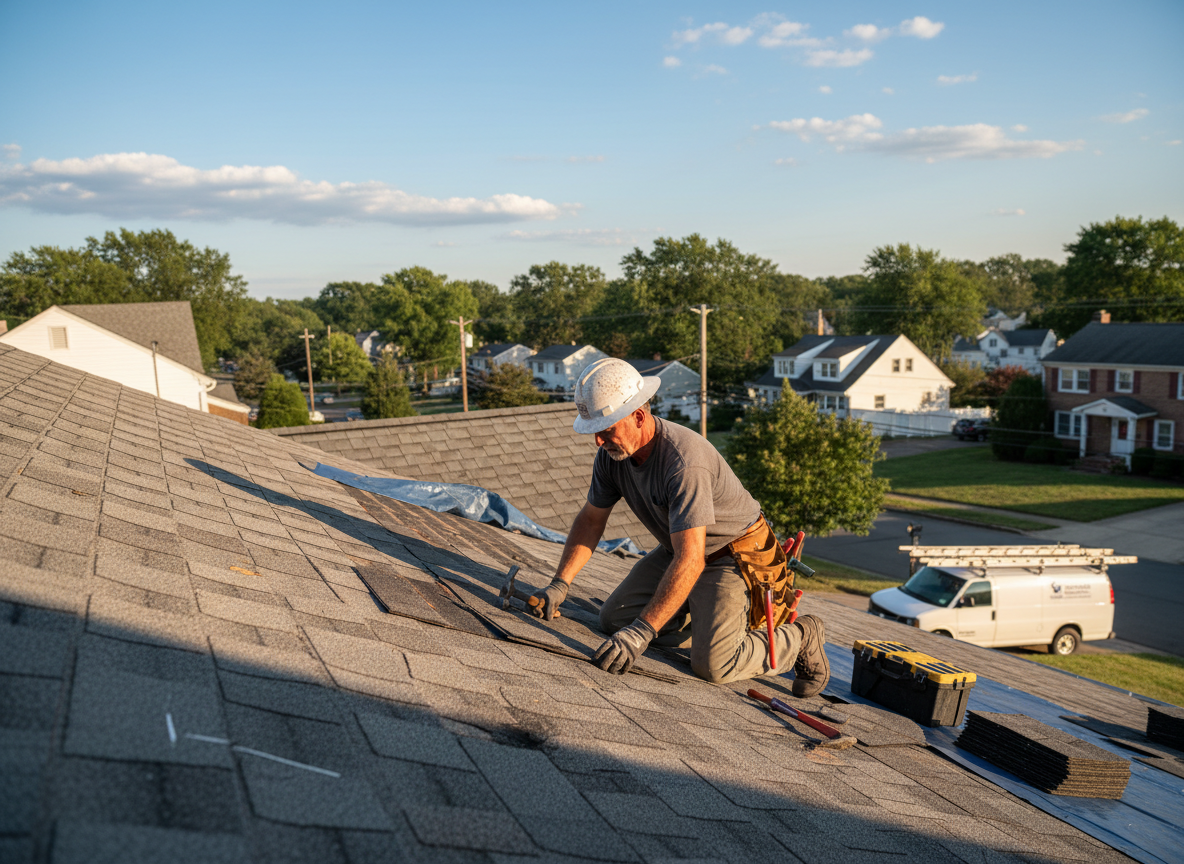
Homes in Union and Ryle often feature asphalt shingle roofs installed over the past two decades that suffer from blistering and granule loss after repeated humid summers. Moisture trapped under the shingles in Boone County attics promotes hidden deck rot, especially where ventilation falls short near Union Community Park. A proper repair starts with lifting affected sections rather than patching over, then replacing felt and matching the existing shingle profile so the fix does not stand out during Florence or Burlington storms.
Mild winters here still bring ice dams along eaves when daytime melt refreezes overnight, forcing water under flashing at valleys and chimneys. Repair crews check step flashing and counter flashing on every job because older Union homes frequently have nail pops that reopen after one heavy rain. Skipping the underlayment upgrade during repair leaves the deck exposed to the next subtropical downpour.
Edge cases include metal roof transitions on outbuildings common in the county where dissimilar materials corrode at seams. Technicians carry color-matched sealants and butyl tape rated for high humidity rather than standard caulk that fails within two seasons. Every repair includes a full perimeter check of gutters and downspouts because clogged lines in Ryle drive water back under the roof edge.
Technician insight
In Union, the thing that catches most people out with roof repair is how quickly humidity under the shingles in Ryle homes turns a small leak into widespread deck rot before the first hard freeze, especially on houses near Union Community Park where tree cover keeps the roof damp longer than open lots in Burlington.
Hidden deck rot after summer storms
A Union homeowner noticed ceiling stains after repeated humid rains. Inspection revealed soft plywood under three courses of shingles where ventilation was blocked. Crew removed the damaged section, installed new decking and synthetic underlayment, then matched the existing shingles. No further leaks appeared after the next storm.
How it works
- 1
On-site inspection
Technician climbs and documents every damaged area, noting ventilation, flashing condition, and deck softness.
- 2
Material match and prep
Shingles are sourced to match existing color and thickness; underlayment and flashing are staged for the repair.
- 3
Repair execution
Damaged sections are removed, deck is dried or replaced, new underlayment and shingles installed with proper nailing pattern.
- 4
Final seal and test
All seams receive manufacturer-approved sealant; water test confirms no active leaks before cleanup.
Pricing
Upfront quotes follow inspection; final price depends on extent of deck damage and material access.