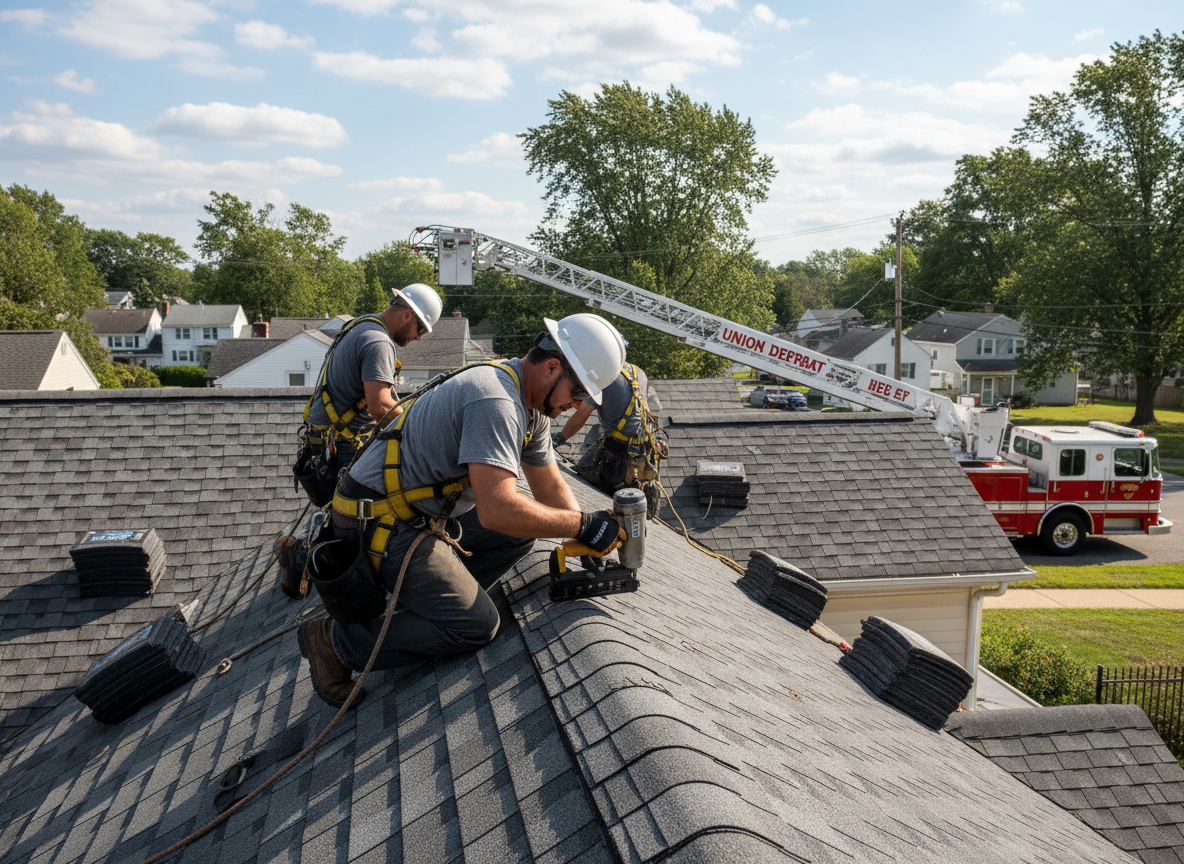
Union homes in neighborhoods like Ryle often feature asphalt shingle or metal roofs on houses built from the 1980s onward. Roofing installers must account for the mild winters and frequent humidity that drive condensation under decks. Proper underlayment and ventilation prevent ice dam risks during rare cold snaps and reduce mold in attics common to Boone County properties near Union Community Park. Installers check existing decking for rot before laying new materials because heavy spring rains can saturate older plywood.
Installation crews working between Union and nearby Florence or Burlington pay close attention to roof pitch and wind exposure. Humid subtropical patterns bring sudden downpours that test flashing around chimneys and valleys. TechPatch crews use ice-and-water shield along eaves and step flashing at walls to match local code requirements in Boone County. They also verify ridge vent sizing so airflow keeps attic temperatures stable during summer humidity spikes.
Edge cases appear on homes with additions where rooflines meet at odd angles. Installers cut valleys precisely and seal them with manufacturer-approved cement rather than relying on generic caulk that fails under repeated freeze-thaw cycles. Metal panel installations require careful screw placement to avoid oil-canning on long runs exposed to prevailing winds from the west. Every job includes a final walkthrough to confirm all penetrations are watertight before crews leave the site.
Technician insight
In Union the thing that catches most people out with roofing installers is skipping extra underlayment on the north-facing slopes near Ryle. Those sides stay shaded and damp longer in our humid subtropical winters, so a standard felt layer lets moisture wick into the deck before the first heavy rain. We always add a self-adhered membrane there even when the code minimum does not require it.
Ryle Addition Roof Tie-In
A Union homeowner called after water stains appeared above a recent room addition. We found the valley between the new and old roof had been flashed with only step flashing and no cricket. Crew removed the shingles, installed a raised cricket and full ice-and-water shield, then re-roofed the section. The attic stayed dry through the next spring storms.
How it works
- 1
Site Assessment
Crew measures the roof, checks deck condition, and notes existing ventilation around Union homes.
- 2
Material Selection
Homeowner chooses shingles or metal panels suited to Boone County humidity and wind loads.
- 3
Deck Preparation
Old roofing is removed, damaged plywood replaced, and ice-and-water shield applied at eaves.
- 4
Installation
New underlayment, shingles or panels, flashing, and ridge vents are installed with manufacturer specs.
- 5
Final Inspection
Team walks the roof and attic to confirm seals and ventilation before cleanup.
Pricing
Upfront quotes after on-site inspection reflect roof size, material choice, and any deck repairs required.